
On being almost there
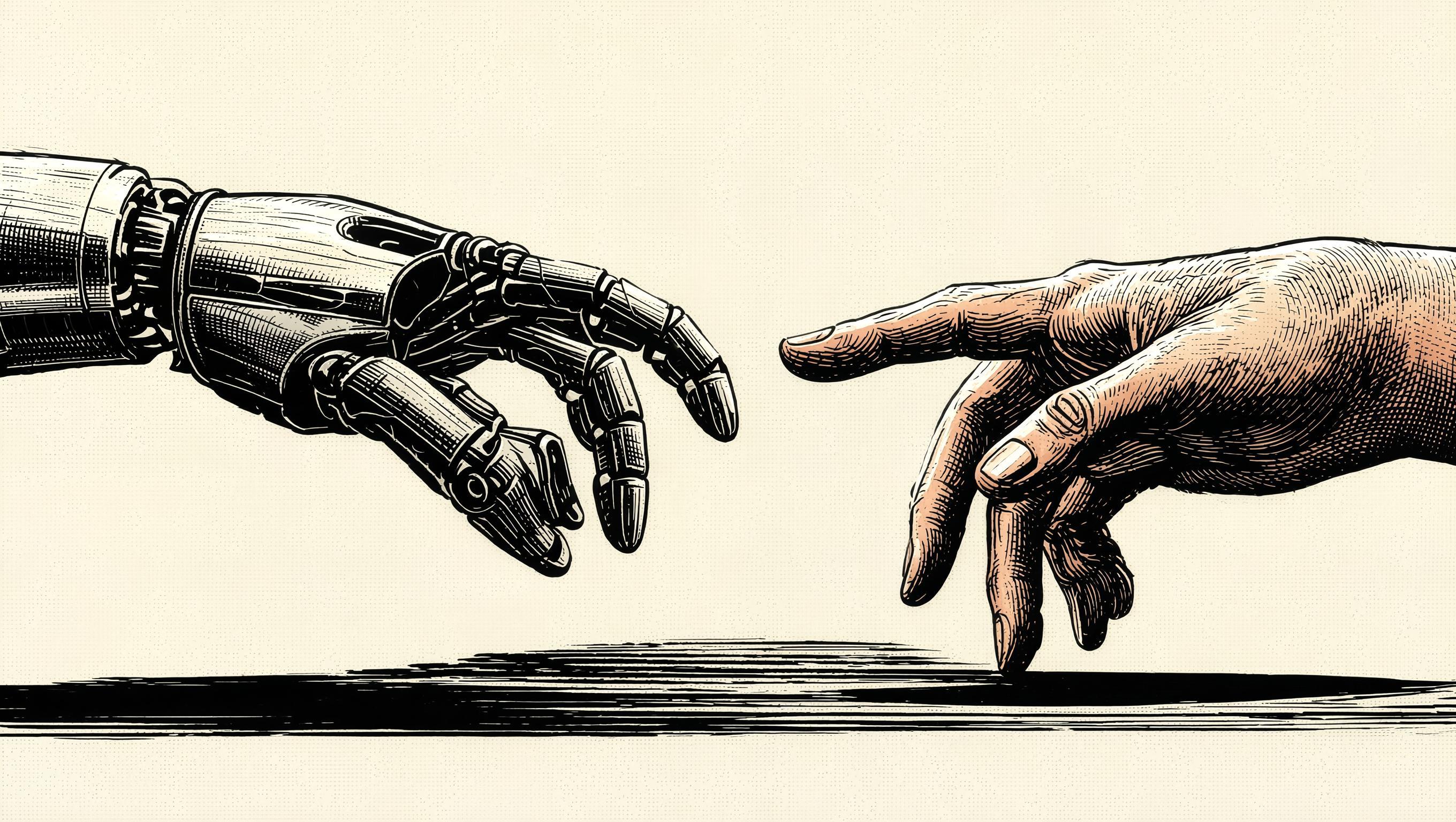
There is a specific kind of trance that sets in when you are working with coding agents.
It starts with a prompt. You hit enter, and the cursor begins to blink. Then, the text starts to flow. It’s a waterfall of code, logic, and structure, appearing faster than you could ever type it. It feels like magic. It feels like the future.
And then, it stops. You run the code. It crashes. Or worse, it runs, but the button is on the wrong side of the screen, or the logic handles the happy path but ignores the edge cases. The AI looks up at you with an optimistic look, proud of the 300 lines of code it just vomited out.
It is “almost there”.
This phrase - almost there - has become the defining slogan of this new way of building. While the critics will point to the flaws as a reason to dismiss the technology, I find myself addicted to the imperfection.
The Seduction of the Near Miss
Why is this so fascinating? If the AI were perfect, it would be boring. If I asked for a web scraper, and it gave me a flawless, production-ready script in a few seconds, my role would be reduced to that of a middle manager. Over time, a feeling of disconnect would set in.
On the flip side, if the AI were terrible, I would simply turn it off and write the code myself.
AI agents live in the uncanny valley of competence. It gets the structure right. It knows the libraries. It understands the intent. It just misses the execution by that final, crucial 5%. It writes a beautiful function but calls the wrong API endpoint. It designs a stunning UI but uses a font that doesn’t exist.
This “near miss” is psychologically potent. In game design and psychology, the “near miss” effect is known to be highly addictive. When a slot machine almost hits the jackpot, dopamine floods the brain almost as much as a win does. It encourages the player to try again.
With AI agents, we are seeing the intellectual equivalent of the near miss. It builds the house but forgets the doorknobs. It’s so close to right that the gap becomes a challenge. It taunts you, “You’re so close. Just fix this one thing. Just one prompt.”
The Over-Confident Junior
Working with coding agents feels like managing a brilliant but incredibly overconfident junior developer. It has read every textbook in the world but has never actually shipped or debugged a production server at 2:00 AM.
When it fails, it fails spectacularly. It hallucinates libraries that don’t exist. It invents functions that should exist but don’t. The interesting part is that it’s believable most of the time. But here lies the beauty: the errors are rarely fatal. They are usually fixable if you caught on early enough.
In the old days of coding, a syntax error was a stop sign. You had to stop, read, parse, and correct. Now, the errors are fluid. You highlight the broken function, type “fix this”, and watch as the agent rewrites its own logic. It is a collaborative dance. It builds the rough draft, I refine the details. It lays the bricks, I point out the wall is crooked, and it instantly rebuilds it.
This fast feedback loop is the addictive part of building in 2026. It removes the drudgery of the blank page but leaves the satisfaction of the fix.
Imperfection as a Feature
We often talk about AI as a tool for efficiency, but I’ve found it to be a tool for exploration.
Because the AI is imperfect, I have to understand what it is doing. I can’t just blindly copy-paste (though many try). I have to be the architect. I have to verify its work. This forces me to engage with the code on a meta-level.
I am no longer writing code line-by-line; I am reviewing pull requests from a machine.
The beauty of this workflow is that it lowers the barrier to creation while raising the value of taste. The AI provides the raw material – often flawed, often messy – but the human provides the direction and the context. The “almost there” nature of the output turns the act of building into a game of sculpture. Slowly chipping away at a block of imperfect marble.
The Joy of the Almost
We are entering an age where “done” is a moving target. The fascination with generative AI isn’t that it solves our problems perfectly. It’s that it solves 90% of the problem in 1% of the time, leaving us with a puzzle to solve.
That puzzle is the addictive part.
Being “almost there” is more exciting than being finished. It is the state of potential. It is the feeling that with just one more prompt, one more tweak, one more adjustment, the chaos will snap into order.
So, I embrace the bugs. I embrace the hallucinated libraries and the slightly-off colour palettes. Because in that gap between what the agent made and what I want it to be, I find the joy of building. I am almost there. And that is a wonderful place to be.

Have thoughts on this post? Leave a comment